The problem is usually context, not effort
When a job is late, the answer is rarely in one place. The owner may be in Xero Practice Manager, the correspondence in the document management system and the calculation in a spreadsheet. Each system can be useful on its own; the friction comes from asking people to reconstruct the same client story each time.
A practice control room gives the team a shared starting point. It makes the next action, ownership, important dates and related client material visible together, so the conversation can move from “where is this up to?” to “what should we do next?”
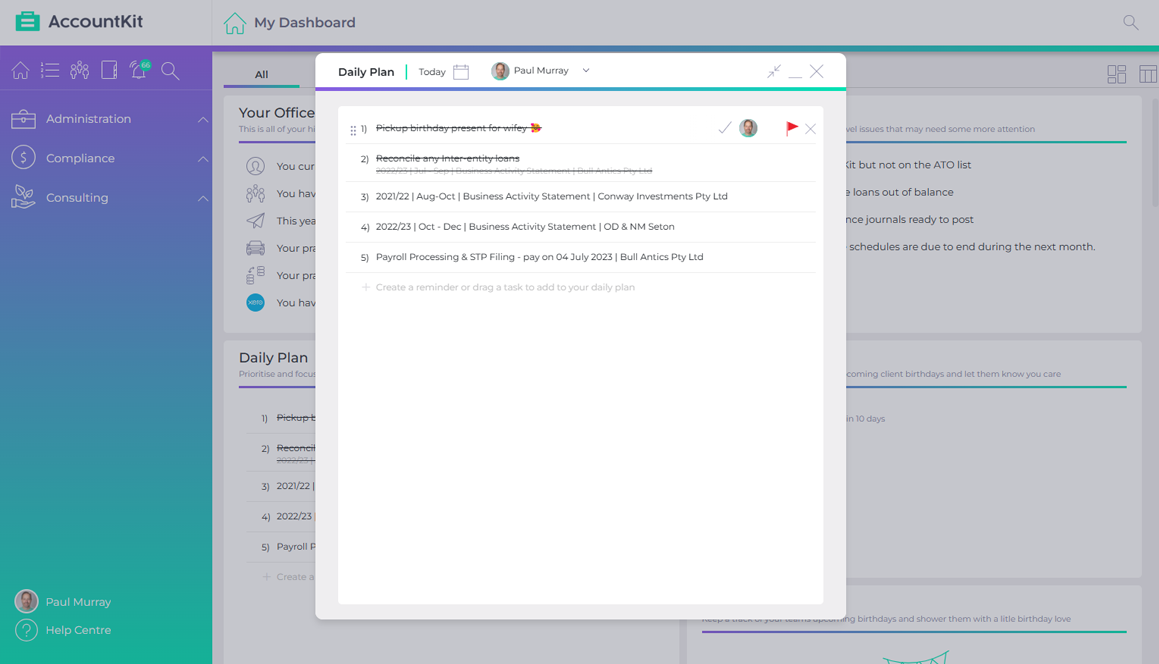
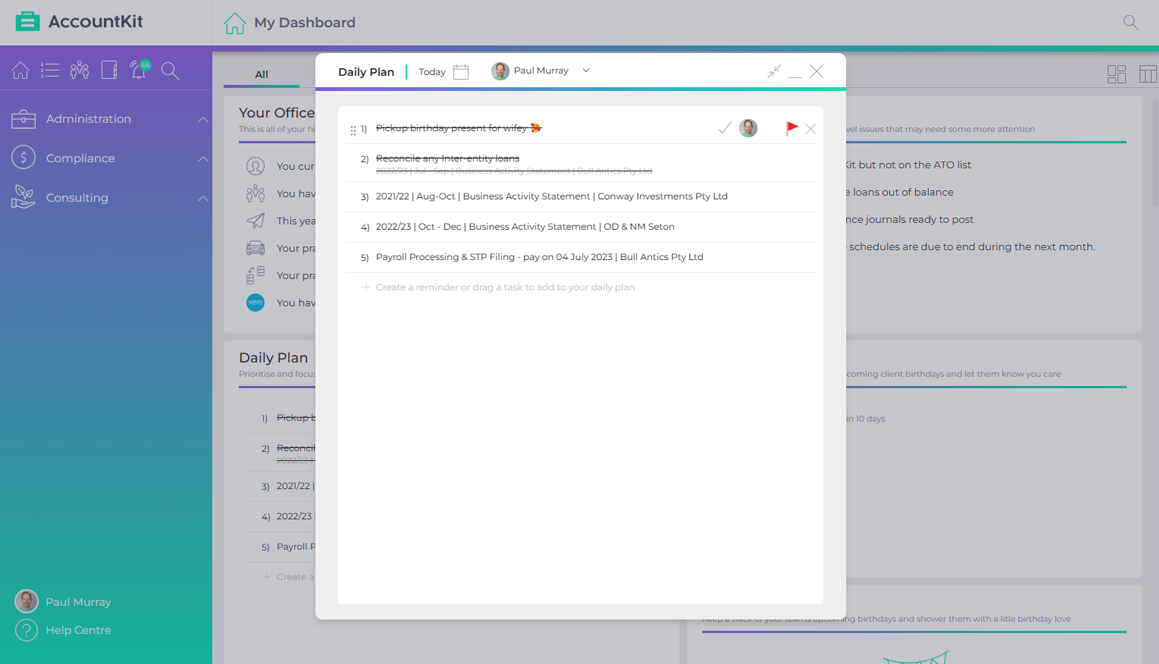
My Daily Plan: the next action, owner and due date in one list.
Start with the moments that create the most chasing
Choose one recurring workflow that creates follow-up: BAS, annual accounts, payroll, or a review queue. Map the hand-offs, the client information people need and the systems they open. This identifies the useful connections before you add another process.
Then agree on a small number of shared signals: who owns the next action, when it is due, whether a client is waiting and where the related documents live. Those signals are more valuable than a long status field nobody maintains.
Connect the view to real work
AccountKit brings workflow, client groups and supporting tools into one view while connecting to the practice stack around it. That means the control room can point to the source information rather than creating another copy to keep current.
The result is a calmer weekly rhythm: managers have a practice-wide view, teams can find client context quickly and the conversations that used to happen in spreadsheets become visible to the people who need them.